Patents predicted Generative AI. Here’s what they’re signalling next.
A look at the decade-long lag between invention and public attention, and why quantum and neuromorphic computing may be approaching their own breakout moment.
Well before tools such as ChatGPT entered the public consciousness, before widespread cultural debate, regulatory attention, or industry disruption, the underlying innovation trajectory was clearly accelerating. The patent record showed a sustained and material increase in AI‑driven technical development, signalling that researchers and engineers were building technologies of significant long‑term impact, even if that progress was not yet visible to the wider public.
To examine the delay between technical development and public awareness, we compared Google Trends (a rough proxy for mainstream interest) with patent filings explicitly referencing terms such as “generative AI” and “large language models.” Until August 2022, public interest remained effectively negligible, with Google Trends registering near zero. In parallel, patent activity had been building steadily out of sight: isolated filings appeared as early as the 2000s, followed by a clear and sustained acceleration from around 2014–2015 onward. Broad public awareness only began to emerge in earnest during 2023, almost a decade after the foundational technical work was already well established.
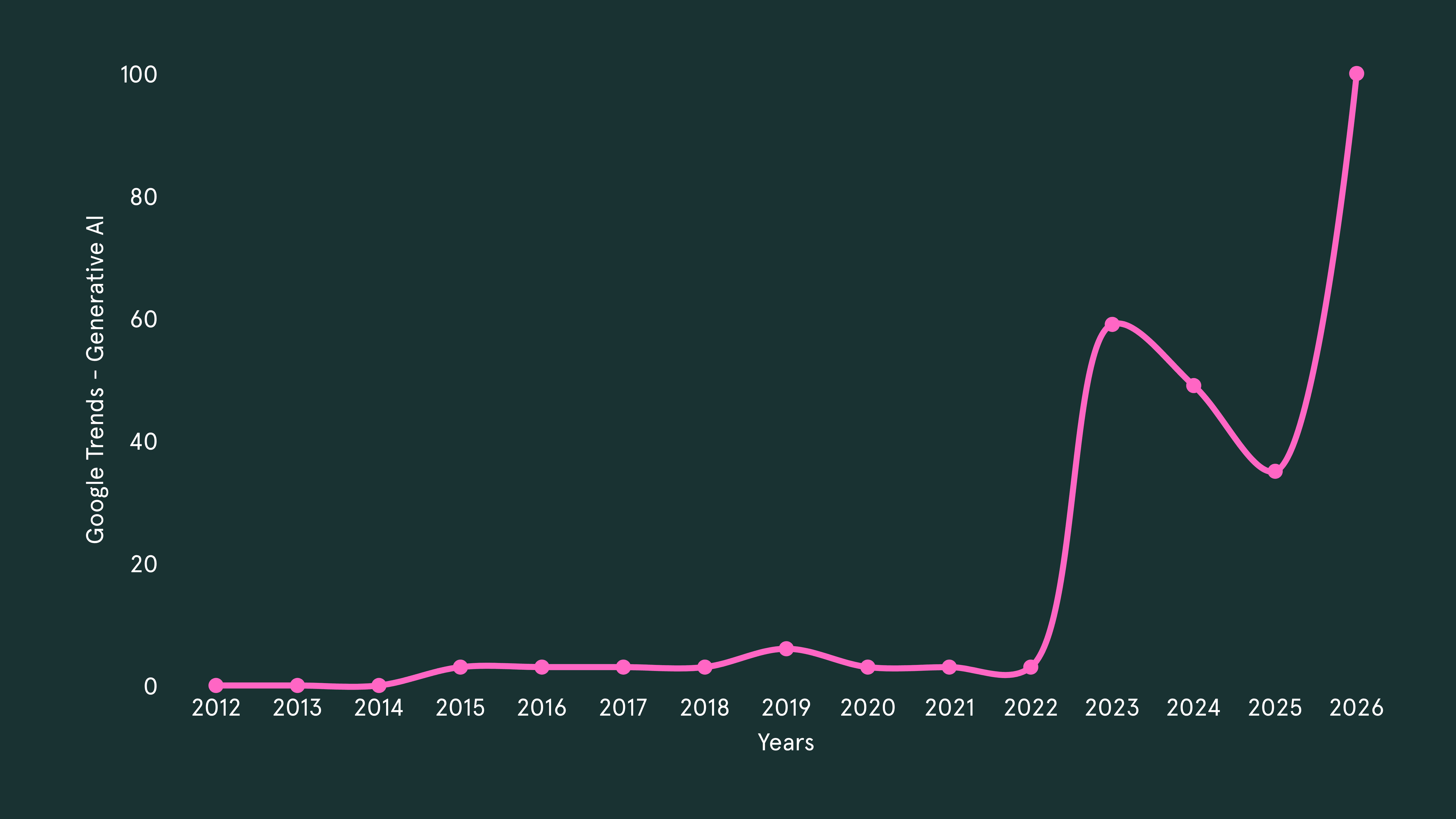
Fig 1: Interest over time in United Kingdom for Generative AI as per Google Trends
The lesson is straightforward: if the goal is to understand what is coming next, patents are often a more reliable signal than headlines. Public attention typically arrives late, after years of quiet technical progress.
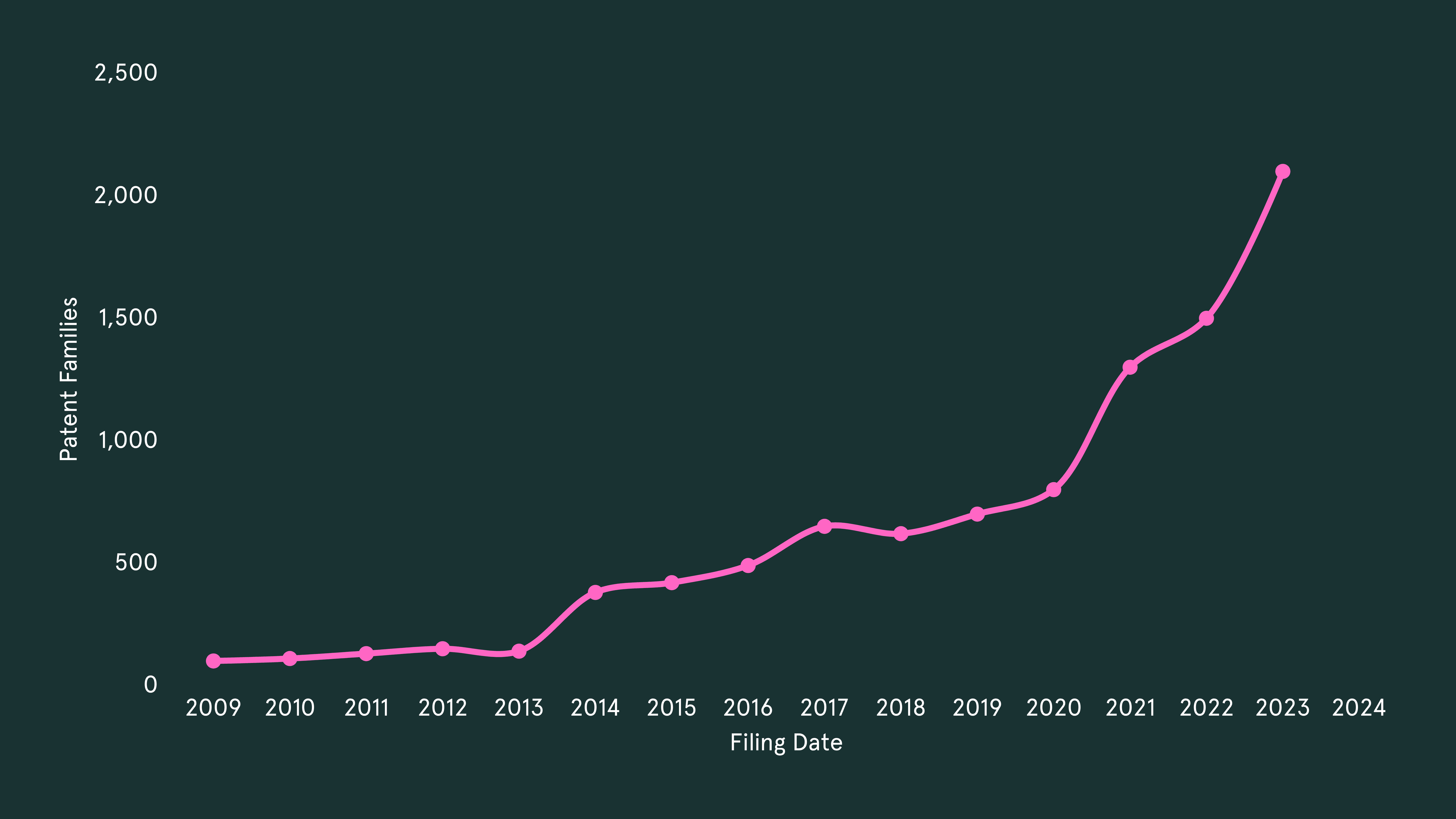
Figure 2: Gen AI patent families filed over time
So which fields are showing those early signals right now? Two fields, quantum computing and neuromorphic computing, are now showing patterns of early‑stage acceleration similar to those observed in generative AI roughly a decade ago. While neither has yet entered mainstream discussion, the underlying rate of innovation suggests significant momentum beneath the surface.
Quantum computing: the next frontier in computational capability
Quantum computing has lingered at the margins of public awareness for years, often reduced to a vague shorthand for “extremely powerful computers.” In practice, it represents a fundamentally different computational paradigm. By using qubits that can exist in superposed states, quantum processors can explore vast solution spaces in parallel, enabling classes of computation that are impractical or impossible for classical machines.
This capability has particular relevance for domains such as:
Molecular and materials simulation
Cryptography and cybersecurity
Complex optimisation problems
Climate and fluid dynamics modelling
Drug discovery and protein interaction analysis
Rather than offering incremental speed gains, quantum computing opens the door to solving problems that are qualitatively different in nature, problems that classical architectures struggle to address at all.
Neuromorphic computing: intelligence embedded in hardware
If quantum computing represents a leap in computational power, neuromorphic computing represents a leap in computational behaviour.
Instead of implementing neural networks purely in software running on GPUs, neuromorphic systems are designed to mirror aspects of biological neural architectures at the hardware level. These systems process information using spiking signals, adapt internal connections dynamically, and operate with extraordinary energy efficiency, closer in principle to the operation of the human brain.
This approach enables capabilities such as:
Ultra‑low‑power AI, potentially orders of magnitude more efficient than conventional architectures
Real‑time robotics with reflex‑like responsiveness
Edge devices and wearables capable of on‑device intelligence without reliance on cloud infrastructure
Sensors that perform computation directly at the point of sensing
AI systems that learn continuously rather than only during discrete training phases
Neuromorphic computing shifts intelligence from being something “run on hardware” to something embodied within hardware itself.
What the patent filing patterns suggest
The patent data indicates that quantum computing and neuromorphic computing are now roughly where generative AI stood around 2012: highly technical, poorly understood by the public, and widely underestimated, yet already accelerating. The inflection points are visible well before mainstream attention arrives. If past patterns hold, the most consequential developments are likely already underway.
Patent filings tell the story clearly once again:
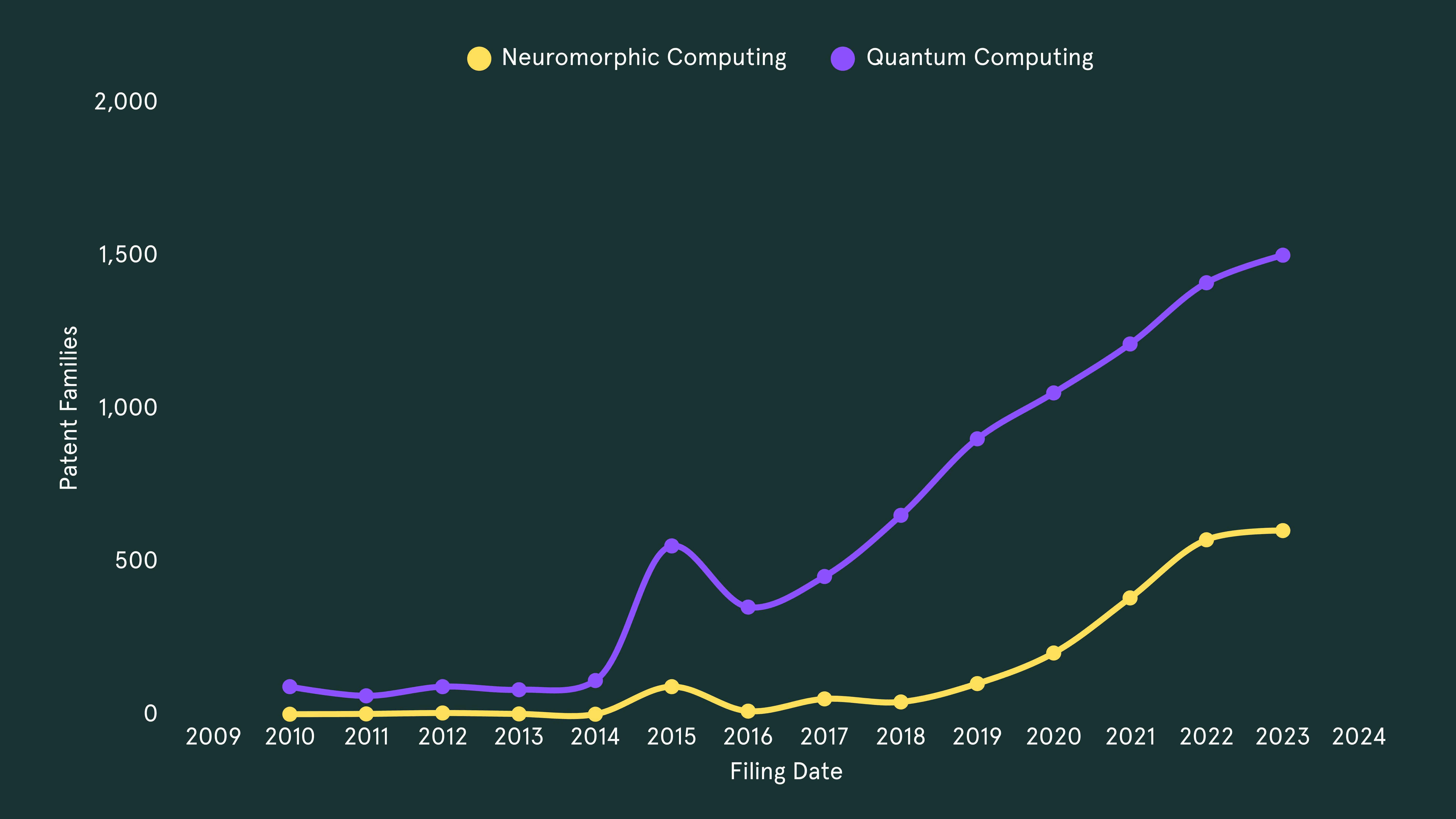
Figure 3: Patent family filings in quantum computing and neuromorphic computing, 2000–2024, overlaid with the equivalent generative AI trajectory at the same stage.
The pattern holds today. Public narratives still lag behind technical reality—the laboratories, research programmes, and engineering teams are well ahead of the headlines, and the patent record reflects that gap with remarkable consistency. As the last decade has shown, today’s niche clusters of highly technical patent filings often become tomorrow’s foundational platforms.
For organisations seeking to anticipate where capability, influence, and competitive advantage will emerge next, patent data remains one of the most dependable leading indicators available. Public attention may indicate when a technology has arrived; patents reveal when it is quietly becoming inevitable. Keeping one eye on mainstream awareness and the other on the patent curve is not just prudent, it is increasingly essential for anyone serious about long‑term technology strategy, investment, and intellectual property positioning.
If you’d like to see what the patent data says about your sector, book a call with the Patently team. We work with in-house IP teams and advisors to turn complex patent signals into clear, actionable decisions.