Patent Filing Checklist: 15 Steps to Success
Intellectual Property Management
Jul 3, 2025
Navigate the patent process with this comprehensive checklist, detailing essential steps to ensure your invention's protection.
Filing a patent can be challenging, but a structured approach improves your chances of success. Here’s what you need to know:
Rejections are common: 30–40% of applications face issues due to errors or poor research.
Costs add up: Expect to spend $10,000–$20,000 for non-provisional patents, including fees and legal help.
Timeline: The process takes 2–4 years from start to finish.
To simplify the journey, follow these 15 steps:
Confirm your idea is patentable (novelty, utility, etc.).
Document every detail of your invention.
Identify inventors and ownership rights.
Choose the right patent type (utility, design, or plant).
Consider filing a provisional application for an early date.
Draft a detailed application (claims, drawings, etc.).
Prepare necessary forms (e.g., ADS, declarations).
Submit through the USPTO’s online platform.
Track progress and respond promptly to USPTO updates.
Address examiner feedback during the review process.
Appeal or request reconsideration if rejected.
Pro Tip: Use AI tools like Patently for drafting and compliance checks to reduce errors.
Roadmap to Filing a Patent Application
15-Step Patent Filing Checklist
Navigating the patent process can be complex, but following these steps can help you secure protection for your invention.
Step 1: Check If Your Idea Can Be Patented
Before diving into the patent process, make sure your invention meets the five key requirements under U.S. law:
Patentable subject matter
Clear and practical utility
Novelty
Non-obviousness
Enablement
Your invention must be new - meaning it hasn’t been publicly disclosed, patented, or used before your invention date - and must not have been publicly used or sold more than a year before filing [16–18]. Additionally, it should represent a non-obvious improvement over existing ideas to someone skilled in the field [16–18]. Finally, your application must explain the invention in enough detail for a skilled person to recreate it without excessive trial and error.
Conduct a thorough search of patent databases, technical literature, and existing products to identify prior art. This step is crucial for understanding your invention's position in the market and shaping your application.
Step 2: Document Your Invention
Carefully document every detail of your invention. Write a clear description of how it works, how it’s assembled, and its purpose. Include technical drawings, such as flowcharts, diagrams, or assembly views, to visually explain its components. Sign, date, and securely store your documentation.
Your documentation should be specific enough for someone in your field to replicate the invention. Highlight unique features, materials, and processes, and consider including multiple variations of the invention to strengthen your patent.
Step 3: Identify All Inventors and Ownership Rights
Accurately listing inventors is essential for your patent's validity. In the U.S., inventors are defined as those who contributed to the conception of at least one claim in the application. If the invention was developed by a team, under employment, or through a research agreement, review contracts to clarify ownership rights and document any agreements in writing.
Step 4: Select Patent Type and Filing Strategy
Decide whether your invention requires a utility, design, or plant patent. Utility patents are the most common, making up about 90% of issued patents. Also, determine whether you’ll file only in the U.S. or seek international protection. For global coverage, consider filing under the Patent Cooperation Treaty (PCT). If you need more time for development or funding, a provisional application can secure an early filing date at a lower cost.
Step 5: File a Provisional Patent Application (If Needed)
A provisional application acts as a placeholder, locking in your filing date while giving you 12 months to file a non-provisional application. This option is ideal if your invention needs further development or if you’re still exploring market opportunities. Keep in mind that provisional applications are not examined and won’t result in a patent unless followed by a non-provisional application.
Step 6: Write the Patent Application
Draft a detailed patent application that includes:
A specification (comprehensive written description)
Claims (defining the scope of your invention)
An abstract (a brief summary)
Drawings (if applicable)
The claims are especially important, as they outline what you own and what others are prohibited from copying. Consider working with a patent attorney or using tools like Patently’s assistant Onardo to draft claims and ensure compliance with USPTO formatting standards.
Step 7: Complete Required Forms and Documents
Prepare all necessary documents, including:
The Application Data Sheet (ADS)
Inventor oaths or declarations
An Information Disclosure Statement (IDS) listing relevant prior art
Calculate your filing fees based on your entity size (large, small, or micro) and check for any fee reductions you may qualify for.
Step 8: Submit Your Application to the USPTO
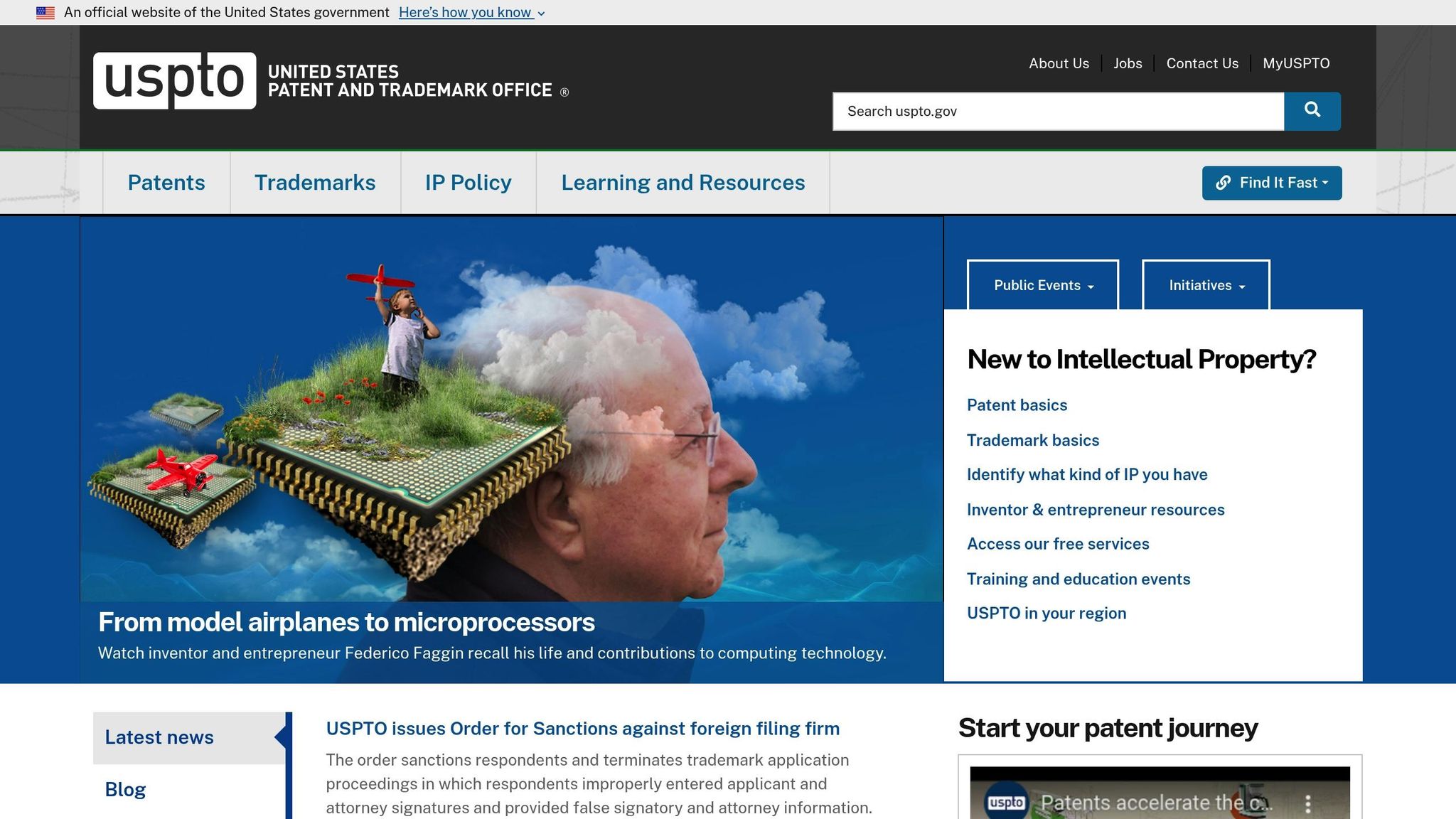
File your application electronically through the USPTO’s EFS-Web system. This method is faster and more cost-effective than paper filing. Double-check that your submission is complete, with all forms, drawings, and fees in order. Once submitted, you’ll receive a confirmation receipt with your application number.
Step 9: Track USPTO Communications and Respond Promptly
Keep an eye on your application’s progress using the USPTO’s Patent Application Information Retrieval (PAIR) system. This tool provides updates on examiner assignments, office actions, and other key notifications. Review your filing receipt for accuracy and set reminders for deadlines to avoid delays or abandonment.
Step 10: Handle Patent Examination and Examiner Feedback
Patent examination usually begins 18–24 months after filing. During this process, an examiner will review your application for compliance with patentability standards. If issues arise, you may receive an office action outlining rejections or requests for clarification. Respond promptly with amendments or additional evidence. Sometimes, scheduling an interview with the examiner can help resolve concerns more efficiently.
Step 11: File Appeals or Reconsideration Requests (If Rejected)
If your application faces a final rejection, you can file a Request for Continued Examination (RCE) or appeal to the Patent Trial and Appeal Board (PTAB). Consulting a patent attorney at this stage can help you determine the best course of action.
Conclusion
The 15-step checklist above outlines the key actions required for a successful patent filing. By following a structured approach, you can reduce drafting errors and improve your chances of success.
"Patent proofreading is a critical process that ensures the accuracy and clarity of patent documents. Mistakes in these documents can lead to serious legal issues, significant financial losses, and a weakened intellectual property portfolio."
– Zeba Akhtar, Mitthatmeer Kaur
In 2024, patent filings reached 3.45 million worldwide, marking a 4% increase from the previous year. As the volume of filings grows and the process becomes more intricate, inventors and businesses must rely on effective tools to navigate these challenges with confidence.
AI-powered platforms like Patently are transforming the patent filing landscape. From documentation to submission, these tools ensure accuracy and compliance with USPTO standards. Features such as AI-assisted drafting through Onardo, semantic search capabilities, and real-time compliance monitoring address common hurdles inventors face.
"Technology-assisted patent filings are on the rise, and for good reason: They enhance filing accuracy, compliance, and efficiency."
– Welocalize
The advantages of these tools go beyond just accuracy. AI-driven workflows and centralized filing management help meet critical deadlines, improve patent defensibility, and optimize budgets. They can also flag potential drafting issues before submission, reducing the risk of USPTO rejections and saving valuable time during the review process.
Consistency at every step of the checklist is essential to protect your invention and set it up for success. Whether you're an independent inventor, a startup, or an established company, leveraging advanced tools and a systematic approach can significantly improve your chances of securing strong, enforceable patent protection.
Using proper filing techniques and advanced management tools not only strengthens your intellectual property portfolio but also minimizes legal risks and enhances your competitive edge. Refer to the checklist as a step-by-step guide to protect your invention effectively.
FAQs
What’s the difference between utility, design, and plant patents, and how do I decide which one fits my invention?
When it comes to patents, there are three main types, each serving a distinct purpose:
Utility patents protect how an invention works or is made. These focus on the functional aspects of an invention. They are the most common type of patent but tend to take more time and money to secure.
Design patents safeguard the appearance or ornamental design of an invention. Unlike utility patents, these are all about how something looks rather than how it functions. They're usually quicker and less expensive to obtain.
Plant patents are reserved for new plant varieties that are asexually reproduced and unique. These apply specifically to distinct and novel plant creations.
When deciding which patent to pursue, consider what part of your invention needs protection. If it's the functionality, a utility patent is the way to go. If it's the appearance, a design patent is more appropriate. And if you've developed a new plant variety, a plant patent is your best option. In some cases, combining utility and design patents can offer more comprehensive protection for your invention.
How does Patently use AI to help reduce errors and ensure compliance during the patent filing process?
Patently leverages advanced AI to make the patent filing process smoother and more reliable. By spotting errors, ensuring legal compliance, and minimizing the chances of rejection, it takes the guesswork out of preparing applications. Its machine learning models carefully analyze submissions for inconsistencies and flag potential problems before they become roadblocks.
By automating tedious tasks like formatting documents and validating data, Patently not only saves time but also boosts accuracy. This makes it easier to handle large workloads and simplifies the process from start to finish. For inventors, startups, and businesses, this means less time buried in paperwork and more time dedicated to creating and innovating.
What should I do if the USPTO rejects my patent application, and how can a patent attorney assist me?
If the USPTO rejects your patent application, don’t worry - you still have options to move forward. You can address the rejection by modifying your application, submitting additional evidence, or presenting stronger arguments to tackle the concerns raised by the USPTO. Another route is to appeal the decision if you believe the rejection was unwarranted.
This is where a patent attorney can make a real difference. They can help fine-tune your application, develop solid legal arguments, and guide you through the often-complex appeals process. With their deep understanding of patent laws and experience in handling examiner objections, they can greatly increase your chances of turning things around. Whether it’s making strategic changes to your application or ensuring it meets USPTO standards, their expertise can be a game-changer.