AI Insights into Green Water Tech Patents
Intellectual Property Management
Apr 19, 2026
AI is transforming patent discovery and IP strategy in green water tech, turning vast patent data into actionable innovation insights.
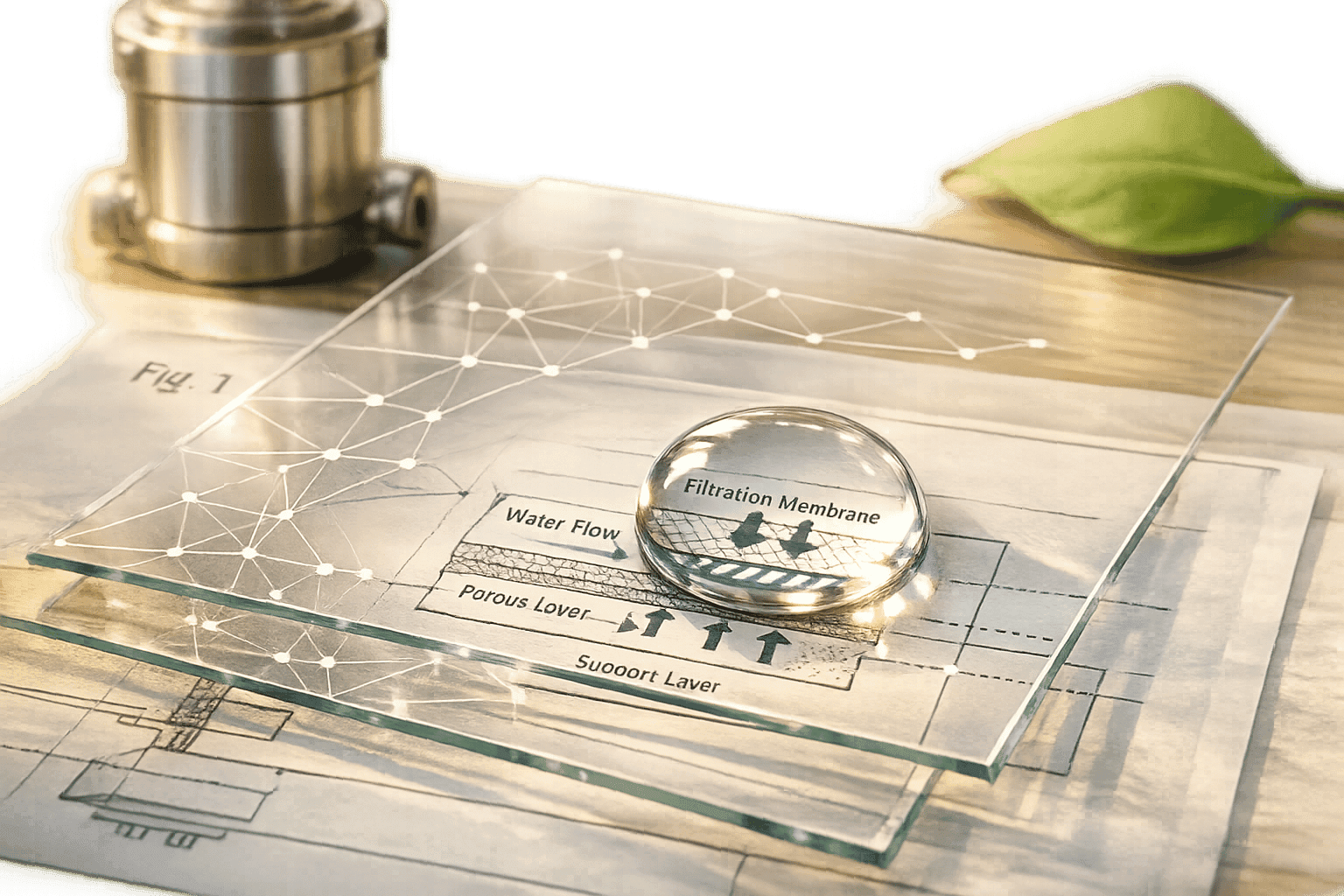
AI is reshaping how patents are managed in green water technology. Traditional keyword searches often fail to capture the complexity of patent language, but AI tools now analyze concepts instead of specific terms. This makes it easier to find innovations in areas like water purification, desalination, and recycling. Platforms like Patently use semantic search and drafting tools to simplify patent management, saving up to 80% of the time spent on searches. Key trends include advanced nanomaterials, AI-regulated wetlands, and anti-fouling solutions, all contributing to faster innovation and better IP strategies. With global patent activity surging - up 300% in some sectors - AI helps navigate this growing landscape efficiently.
Deploying Artificial Intelligence in Water Treatment to Support Future Sustainability
Green Water Technologies and Patent Activity
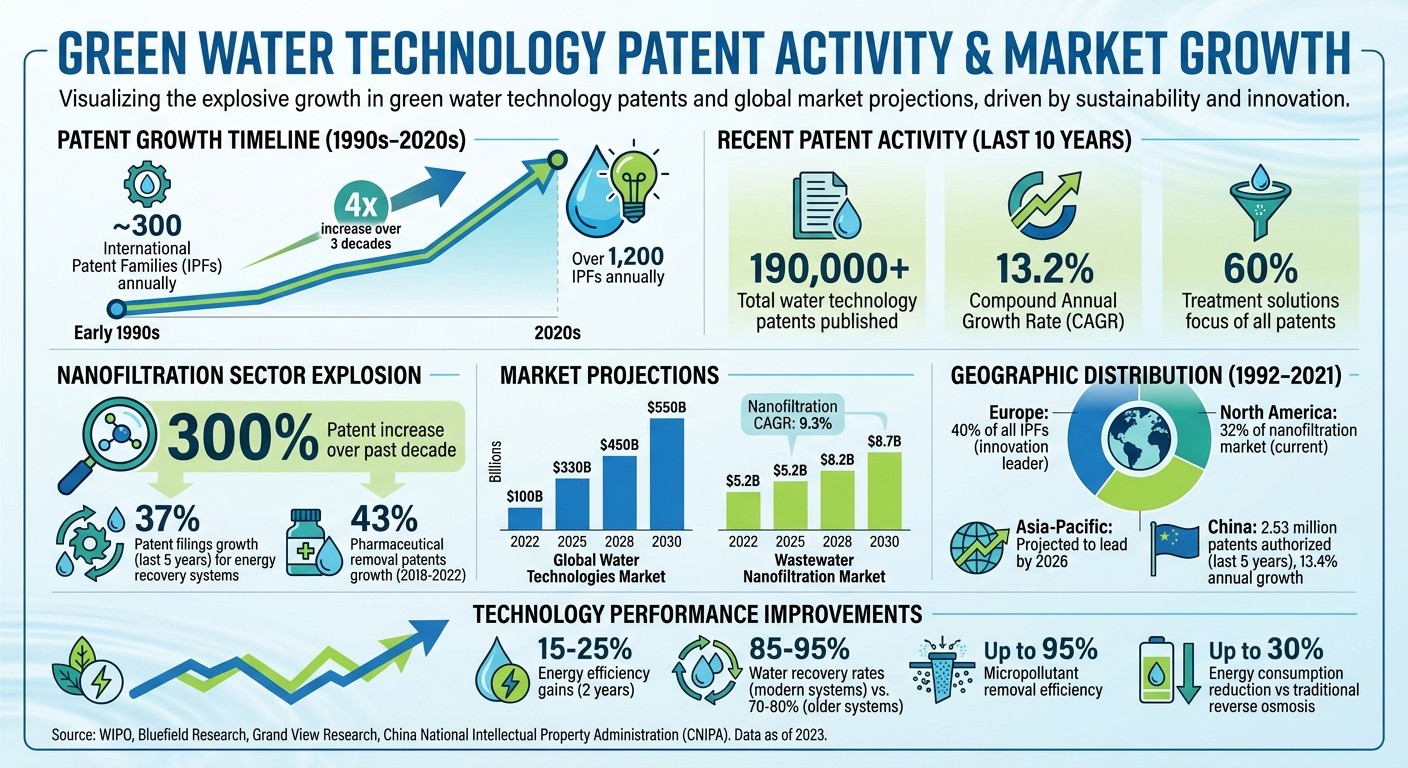
Green Water Technology Patent Growth: Key Statistics and Market Trends 2022-2030
Green water technologies focus on advanced purification, desalination, recycling, and conservation systems, all aimed at tackling water scarcity, contamination, and related challenges. Over the last three decades, patent activity in this field has surged, reflecting both the urgency of water issues and the commercial potential of these technologies.
The growth in water-related innovations has been striking, with International Patent Families (IPFs) increasing from roughly 300 annually in the early 1990s to over 1,200 in the 2020s. Around 60% of these patents focus on treatment solutions. The global market for water technologies is projected to hit $330 billion by 2025 and $550 billion by 2030. In the past ten years alone, more than 190,000 water technology patents have been published worldwide, with a compound annual growth rate of 13.2%. This rapid pace of innovation highlights the demand for top patent tools to help navigate the increasingly complex patent landscape.
New Developments in Green Water Technology
Recent patents reveal a growing focus on advanced nanomaterials like graphene oxide, carbon nanotubes, and metal-organic frameworks (MOFs). These materials are being integrated into water treatment membranes to improve selectivity and minimize fouling. The global market for wastewater nanofiltration, valued at $5.2 billion in 2022, is expected to grow to $8.7 billion by 2028, with a compound annual growth rate of 9.3%. Over the past decade, patents in this sector have increased by approximately 300%.
One standout example is Toronto-based startup Xatoms, which launched pilot projects in June 2025 using visible light–activated photocatalysts discovered with an AI platform. These materials, activated by sunlight or LED light, eliminate bacteria and chemicals. Xatoms secured $3 million in pre-seed funding and, in January 2026, received a $226,000 grant after showcasing their technology at the World Economic Forum.
Other notable advancements include AI-regulated constructed wetlands that optimize nitrogen and phosphorus removal while boosting carbon sequestration. Anti-fouling solutions have also made strides, such as Evoqua Water Technologies' zwitterionic polymers that create a hydration layer on membranes to prevent fouling. Additionally, Sinopec has patented ceramic-supported polymeric nanofiltration membranes designed for extreme conditions, including pH levels from 2 to 12 and temperatures up to 194°F.
Worldwide Patent Activity in Water Sustainability
Patent trends highlight key innovation hubs across the globe. Between 1992 and 2021, European countries accounted for 40% of all International Patent Families in the water sector, demonstrating leadership in various water technologies. While North America currently holds 32% of the nanofiltration market, the Asia-Pacific region is poised to take the lead by 2026, driven by major infrastructure investments in China and India.
China, in particular, has seen remarkable patent activity, authorizing over 2.53 million patents across all sectors in the past five years, with an annual growth rate of 13.4%. The country aims for patent-intensive industries to contribute 13% of its GDP by 2025. Singapore has emerged as a hub for nanofiltration and digital twin technologies in wastewater treatment, while the Middle East has become a center for desalination innovation due to severe water shortages.
Regulatory changes are also driving innovation. For instance, the EU's 2020 revision of its Drinking Water Directive and China's "Water Ten Plan" have spurred patent filings targeting pollutants like endocrine-disrupting compounds and PFAS. Recent improvements in membrane structure and module design have delivered energy efficiency gains of 15–25% in just two years. Modern nanofiltration systems now achieve water recovery rates of 85–95%, compared to 70–80% for older systems. These trends underline the importance of leveraging AI to extract valuable insights from the vast pool of patent data, helping businesses and researchers stay ahead in this dynamic field.
How AI Extracts Insights from Patent Data
The sheer number of patents in water technology makes it nearly impossible to analyze them manually. AI steps in to simplify this process, automating tasks like identifying innovations, mapping citation networks, and extracting performance metrics. What would take months to do manually can now be done in a fraction of the time. This efficiency strengthens intellectual property (IP) strategies by quickly spotlighting key advancements in green water technology.
AI-Powered Semantic Search
One major challenge in patent analysis is navigating the complex and varied terminology used across different fields. Semantic search tackles this by focusing on the meaning behind patent language rather than just matching specific keywords. For example, when searching for green water technologies, the system can identify conceptually similar patents, even if they use different terminology. This is particularly useful because green water tech often combines terms from fields like materials science, environmental engineering, and chemistry.
Patently's Vector AI leverages semantic search to uncover patents based on their conceptual connections. This helps professionals discover relevant innovations across a wide range of technical vocabularies. Beyond understanding terminology, AI also maps the relationships between patents, showing how they influence each other over time.
Citation Analysis for IP Strategy
Patent citations are a goldmine of information about how technologies evolve and influence one another. Forward citations - when newer patents reference an older one - can indicate a patent's market influence. For example, if multiple recent patents cite an older water treatment invention, it suggests that the original patent addressed a critical industry issue. Backward citations, on the other hand, trace the technical groundwork of an invention, helping experts assess whether a field is stable or rapidly advancing.
Patently's citation browser automates this process, mapping both forward and backward citations. These citation clusters reveal which organizations are building on each other’s work and which technical approaches are gaining momentum. For green water technologies, this analysis is invaluable. It helps determine whether a patent portfolio contains groundbreaking innovations that competitors may need to license or if it consists of smaller, incremental improvements.
In addition to mapping influence, AI provides measurable insights into a patent's impact through specific performance metrics.
AI-Generated Metrics and Performance Data
AI goes a step further by generating metrics that quantify a patent's innovative impact. For instance, originality measures how many different technological fields a patent draws from. High originality scores in green water technology often indicate breakthroughs that integrate knowledge from various disciplines. Meanwhile, generality measures how widely a patent is cited across different fields, showing its potential to drive advancements in areas like agriculture or industrial waste management.
Patents in the Green Intelligence (GI) category - those combining AI with green technologies - tend to have significantly more forward citations than standard patents. This suggests they have a stronger influence on future innovations. These metrics allow IP professionals to make informed decisions about which patents to acquire, license, or contest, focusing on their actual technological impact rather than relying on subjective evaluations.
Case Studies: AI Analysis of Green Water Patents
Real-world examples highlight how AI is reshaping the traditionally manual process of patent analysis. By focusing on two areas - advanced purification and desalination - these case studies demonstrate how AI-enabled patent analysis is helping companies make smarter intellectual property (IP) decisions and accelerating innovation. Let's take a closer look at how this plays out.
Advanced Water Purification Systems
Over the past decade, wastewater nanofiltration patent filings have skyrocketed by 300%, resulting in a dataset far too vast for manual review. To tackle this, AI tools using Latent Dirichlet Allocation (LDA) analyzed 8,579 patents, uncovering trends in areas like substrate optimization and process coupling. This analysis revealed which research directions were gaining traction and which were falling behind.
One key discovery was the 2018 emergence of energy-efficient module designs in nanofiltration technology. This trend wasn’t immediately apparent from examining individual patents but became clear when AI analyzed citation patterns and technical summaries across thousands of documents. The data also showed that patents incorporating energy recovery systems and low-pressure operations have experienced a 37% increase in filings over the last five years, underscoring a shift toward more sustainable solutions.
AI-optimized nanofiltration systems now achieve up to 95% efficiency in removing micropollutants - like pharmaceuticals and microplastics - while consuming up to 30% less energy compared to traditional reverse osmosis systems. These advancements highlight AI’s role in pushing water purification technology forward.
Desalination and Water Recycling Systems
AI is also driving innovation in desalination and water recycling technologies, uncovering breakthroughs that significantly improve water recovery rates. For instance, in March 2015, Pacific Advanced Civil Engineering, led by inventors Andrew T. Komor and Keisuke Ikehata, patented a system to treat high-solids fracking wastewater. Their design included a concentrate recycling conduit that increased reclaimed water recovery from 70% to 80%, with the potential to achieve an impressive 97% total recovery rate.
Another example comes from July 2006, when Ata M. Hassan of Saline Water Conversion Corp developed a dual-stage NF2-SWRO2 desalination process. This hybrid system achieved a 66% water recovery rate for seawater with a total dissolved solids (TDS) level of approximately 35,000 ppm, far exceeding the conventional recovery rates of 25% to 35% for Gulf seawater desalination. AI’s citation analysis revealed how this patent influenced subsequent innovations in dual-stage processing, providing IP strategists with valuable insights into competitor strategies.
Additionally, patent filings related to pharmaceutical removal capabilities grew by 43% between 2018 and 2022, driven by stricter regulations and market demand. AI-generated metrics now help companies evaluate their technologies by categorizing patents into "Problems Solved", "Methods Used", and "Benefits". This allows innovators to quickly assess whether their solutions stand out or risk competing in an overcrowded field, further emphasizing AI’s role in shaping sustainable water technologies.
Using Patently for Green Water Tech IP Management
Managing intellectual property for green water technologies requires tools that can keep up with rapid innovation and technical complexity. Patently’s AI-powered platform steps up to this challenge by combining patent drafting, team collaboration, and portfolio management into a single, streamlined environment. This integration ensures that insights gained from AI-driven patent analysis transition smoothly into actionable IP management.
AI-Assisted Patent Drafting with Onardo
Onardo, Patently’s generative AI patent drafting tools, is designed to simplify the patent drafting process for green water technologies. Whether it’s advanced water purification systems or desalination technologies, Onardo helps transform technical diagrams and source code into USPTO-compliant language. It handles text, claims, and drawings in one interface, speeding up the process while keeping attorneys in control.
One standout feature is the “Pin” tool, which allows senior attorneys to lock critical legal phrases or technical descriptions, ensuring that these essential elements remain intact during revisions. This is particularly useful for safeguarding the precision required in green water tech patents.
Team Collaboration and Project Management
Patently also excels in fostering real-time collaboration, making it easier for teams to act on AI-driven insights. Using Y.js technology, multiple users can edit patent documents simultaneously without conflicts. For organizations managing diverse portfolios - like water recycling systems or purification technologies - the platform offers hierarchical project organization. Teams can structure applications by department, client, or case, tailoring the workflow to their needs.
Role-based access control and ethical walls ensure that sensitive information is only accessible to the right people. Features like built-in commenting and a citation browser streamline feedback and navigation, while the “Strategy Notes” section allows teams to centralize prior art excerpts and AI insights. Additionally, integrations with tools like Slack, GitHub, and PowerPoint make it easy to generate structured Invention Disclosure Forms directly from technical notes and diagrams. This robust framework supports teams at every stage of innovation, all while offering scalable pricing options.
Patently Plans and Pricing
Patently provides tiered pricing plans to meet the needs of businesses and innovators in the green water technology space:
Free Plan ($0 for 1 user): Includes basic search filters, Onardo chat access, and patent family browsing.
Starter Plan ($125/month/user, up to 10 users): Adds semantic search, analytics, and team collaboration tools.
Business+ Plan (custom pricing): Includes AI-assisted drafting with Patently Create, AI-powered prosecution with Patently Shape, and Vector AI semantic search.
Law Firm+ Plan (custom pricing): Offers matter-centric management, client access portals, and IPMS integration.
Enterprise Plan (custom pricing): Features tailored solutions, advanced Standard Essential Patent (SEP) analytics, and support for tracking ESG metrics, environmental impact assessments, and sustainability goals.
Each plan is designed to support innovators at different stages, ensuring they have the tools needed to manage their intellectual property effectively.
Conclusion
AI is reshaping how patents are managed in the field of green water technology. With tools like semantic search, it’s easier than ever to grasp the technical core of innovations. This means critical prior art - whether related to "carbon sequestration" or "CO2 capture" - is less likely to slip through the cracks. By integrating these tools into invention disclosures, teams can validate patentability and uncover whitespace opportunities earlier in the R&D process.
For organizations looking to adopt AI, a 30-day pilot program offers a structured path. It covers everything from initial setup and security measures to executing and standardizing insights, ensuring a smooth transition into AI-driven workflows.
Patently takes these advancements further by combining AI-powered drafting, semantic search, and real-time collaboration to streamline IP management. Automated ESG scoring aligns patent portfolios with sustainability goals, a growing priority as investors and regulators push for greater transparency. Meanwhile, features like secure drafting and hierarchical project organization help teams manage diverse portfolios across areas like water recycling, purification, and desalination. Importantly, AI acts as a "first drafter" - a tool to enhance, not replace, human expertise. Standardized checklists ensure technical and legal consistency, while robust data protection measures like encryption and zero-data retention safeguard sensitive IP.
From conducting Freedom to Operate reviews early in development to managing environmental impact assessments for SEC climate disclosure compliance, AI transforms patent management into a continuous, real-time process. The real question is no longer if AI should be integrated, but how quickly it can be adopted to maintain a competitive edge in green water technology innovation.
FAQs
How does semantic search find relevant water tech patents without exact keywords?
Semantic search uses vector AI to analyze the meaning and context within patent texts, making it easier to pinpoint relevant water tech patents. Unlike traditional keyword searches, this method identifies conceptually similar patents, even when exact keywords are missing. It’s especially useful for overcoming challenges like vocabulary differences and translation barriers.
Which AI patent metrics matter most for green water IP decisions?
When it comes to making decisions about intellectual property (IP) in green water technologies, certain AI-driven metrics play a crucial role. These metrics focus on assessing patent quality and the impact of innovation.
Some of the critical factors include:
ESG-related evaluations: Evaluating how patents align with environmental, social, and governance (ESG) principles.
Patent lifecycle monitoring: Keeping track of a patent's journey, from filing to expiration, to gauge its long-term viability.
Alignment with sustainability standards: Ensuring that the technology supports broader sustainability goals.
By analyzing these indicators, organizations can better understand the relevance and potential value of green water technologies. This, in turn, helps shape smarter IP and innovation strategies.
How can a team pilot AI for patent work in 30 days?
To get started with AI for patent work in just 30 days, here's a simple plan:
Set clear goals: Decide which tasks you'll target first, such as drafting patents or conducting prior art searches. This helps focus your efforts.
Pick the right AI tool: Look for platforms tailored to patent-related tasks, like Patently, to streamline your workflow.
Train and test: Equip your team with the necessary training, try out the AI on pilot tasks, and collect feedback to see how well it performs.
Use the results to fine-tune your approach and show the potential of AI in your patent processes.